Home & Lifestyle
=
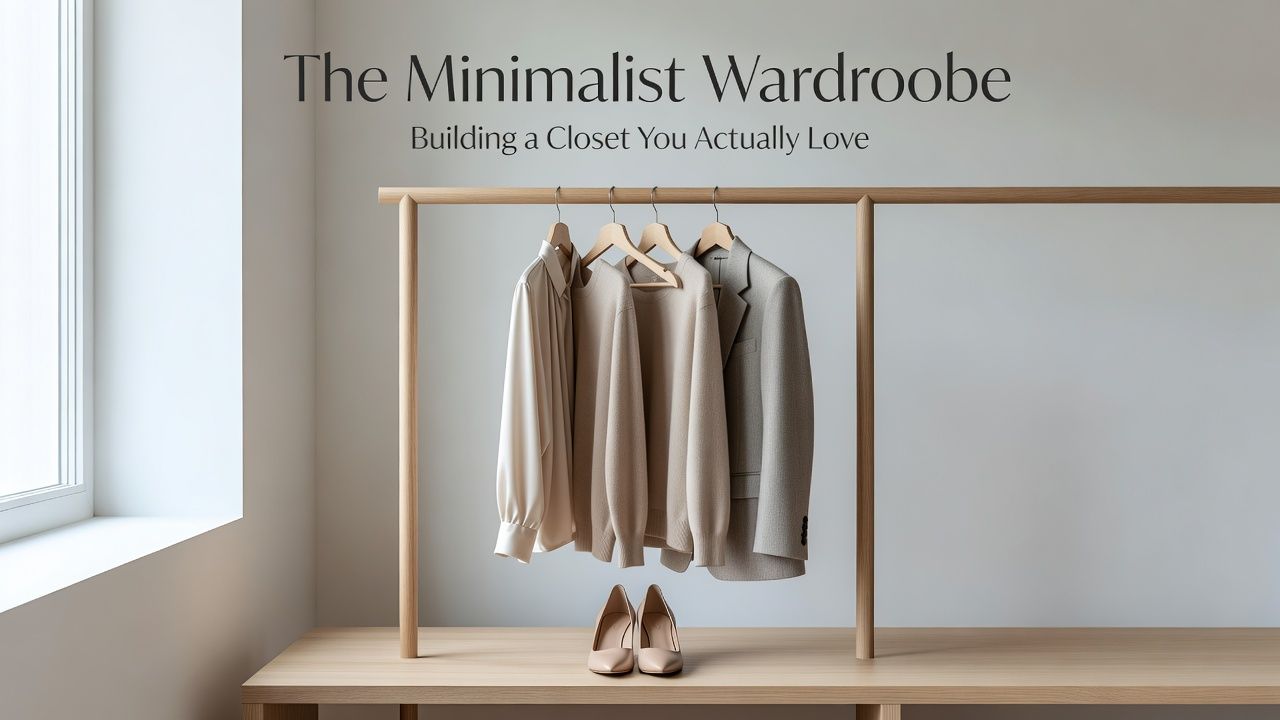
A full closet and nothing to wear is the modern paradox. The fix isn’t more clothes — it’s fewer, better ones, chosen to work together. Here’s how to build a wardrobe that dresses you effortlessly.
Open most closets and you’ll find a strange contradiction: they’re stuffed, and yet the person standing in front of them feels they have nothing to wear. This isn’t a personal failing; it’s the predictable result of how most of us acquire clothes — impulsively, in response to trends, sales, and single occasions, one disconnected piece at a time, until the closet is a graveyard of items that don’t work together, don’t fit our real lives, or don’t actually get worn. Studies of consumer behavior regularly surface the same finding: people wear a small fraction of what they own, the famous idea that we live in perhaps twenty percent of our wardrobe while the other eighty percent hangs untouched. The minimalist wardrobe is the deliberate correction — a smaller, curated collection of pieces you genuinely love, that fit well, and that combine into countless outfits.
The appeal goes well beyond aesthetics. A curated wardrobe means easier mornings (fewer, better decisions), more money (buying less, and better), less waste, and the quiet daily pleasure of a closet where everything works. It’s also part of a broader reckoning with fast fashion, one of the most wasteful and exploitative industries on the planet — agencies like the EPA track the mountains of textile waste it generates, and the environmental case for buying less and keeping it longer is substantial. This guide covers the whole process: the philosophy, how to audit what you have, how to define your personal style, how to build a versatile core, and how to shop so the closet stays curated rather than creeping back to chaos. Minimalism here isn’t a rigid number of items or a uniform of beige — it’s intentionality, in whatever style is genuinely yours.
Why less works better
The counterintuitive heart of a minimalist wardrobe is that fewer clothes produce more outfits, not fewer — because the pieces are chosen to work together. A closet of forty random items, each bought for a different reason in a different palette, yields surprisingly few complete outfits, since half of them coordinate with nothing. A carefully chosen thirty that share a coherent color story and style can yield dozens of combinations, because almost everything pairs with almost everything else. This is the entire mathematics of the capsule wardrobe, and it explains the paradox of the stuffed-but-unwearable closet: the problem was never quantity, it was coherence. Coordination, not accumulation, is what makes a wardrobe feel abundant.
There’s a cognitive benefit too, sometimes called decision fatigue. Every choice you make in a day draws down a finite reserve of mental energy, and a closet demanding a complex decision each morning — sorting through options, many of which you don’t love — spends that energy before the day has begun. It’s no accident that a number of high-performing people famously simplified their clothing to near-uniforms, removing the choice entirely. You needn’t go that far, but the principle scales: a wardrobe where nearly everything works reduces morning friction to near zero, freeing attention for things that matter more. The minimalist closet isn’t about caring less about clothes — it’s about caring more, on the front end, so the daily act of dressing becomes effortless rather than exhausting.
The audit: making friends with what you own
Building a curated wardrobe starts not with shopping but with a clear-eyed look at what’s already there. Take everything out — genuinely everything — because you can’t curate what you can’t see, and a pile on the bed forces honest reckoning that a crammed rail allows you to avoid. Then sort every item into a few honest categories, judging each on three questions: does it fit and flatter me now (not the aspirational size, not the past self), do I actually reach for it and feel good in it, and is it in good condition? The goal is to surface the truth most closets hide: the small set of pieces you truly wear and love, versus the large set you’re keeping out of guilt, hope, or habit.
| Sort into… | What goes here | What to do |
|---|---|---|
| Love & wear | Fits now, feels good, worn often, good condition | Keep — and study it; this is your real style |
| Maybe / undecided | Torn about it; unsure if you’ll wear it | Box it for a season; wear what you miss, release the rest |
| Repair / alter | Loved but broken, or nearly-right with a tweak | Fix it promptly — a good tailor is a wardrobe’s best friend |
| Let go | Doesn’t fit, never worn, worn out, “not me” | Donate, resell, or recycle textiles responsibly |
Two mindset notes make the audit easier. First, letting go isn’t wasteful — the money’s already spent whether the item hangs unworn or goes to someone who’ll use it, and keeping guilt-purchases as penance helps no one. Donate wearable clothes, resell the valuable ones, and recycle textiles that are past wearing rather than trashing them. Second, the “love and wear” pile is pure gold: it’s a data set revealing your actual style — the colors, cuts, and fabrics you genuinely gravitate to — which is worth studying closely, because it tells you what to buy in future far more reliably than any trend or aspiration. The audit isn’t just decluttering; it’s research into who you actually are when you get dressed.
Define your style and your palette
Before building anything, get clear on two things: your genuine personal style and a coherent color palette, because these are what turn a pile of clothes into a wardrobe. Personal style isn’t about following trends or fitting an aesthetic label; it’s about what makes you feel comfortable, confident, and like yourself — discoverable by studying your “love and wear” pile, noticing what you admire on others, and being honest about your real life (a wardrobe built for a fantasy of galas and hikes you don’t actually attend will fail you daily). The most useful filter is your actual lifestyle: dress for the life you genuinely lead — its real proportions of work, home, and occasion — not the one on your vision board. A closet aligned to your true days will simply get worn.
A coherent color palette is the technical secret that makes minimalism work, and it’s simpler than it sounds. Choose a small set of colors that suit you and, crucially, work together: typically a base of neutrals (the workhorses — think black, navy, grey, cream, tan, olive, or whichever neutrals flatter you), plus a few accent colors you love. When your wardrobe shares a palette, nearly everything coordinates with everything else, which is exactly what generates all those effortless combinations from few pieces. This doesn’t mean a drab or all-neutral closet unless that’s your taste — it means choosing color intentionally so it harmonizes rather than clashes. Pick colors that genuinely flatter and delight you, build a base of versatile neutrals, and add your accents deliberately; that single discipline does more for a functional wardrobe than any individual purchase.
Building the versatile core
With style and palette defined, you build the wardrobe around a core of versatile, well-fitting basics — pieces that combine easily and suit many occasions — then add a smaller number of items expressing your personality and covering specific needs. The exact contents depend entirely on your climate, work, and life (a specific “list of essentials” is less useful than the principle), but the categories below are the universal skeleton. The magic ingredient throughout is versatility: prioritize pieces that work across multiple settings and pair with many others over single-purpose items, because a top that goes with three bottoms and dresses up or down earns its hanger many times over.
| Core category | The role it plays |
|---|---|
| Versatile tops | Well-fitting basics in your palette that layer and pair widely |
| Reliable bottoms | A few trousers/skirts/jeans that go with most of your tops |
| Layers | A cardigan, jacket, or blazer that pulls outfits together and extends seasons |
| A dress or two | Complete outfits in one piece; dress up or down (if dresses suit your life) |
| Outerwear | A good coat/jacket for your climate — high-wear, worth investing in |
| Footwear | A small set covering your real needs: everyday, dressier, weather |
| Personality pieces | A handful of items — color, pattern, accessories — that make it yours |
Two things elevate a core wardrobe far beyond its item count. The first is fit, the single most important and most underrated factor: a modest garment that fits beautifully looks better than an expensive one that doesn’t, which is why a good tailor is a minimalist’s secret weapon — small alterations transform how clothes look and how confident you feel in them, often for very little. The second is accessories, which do disproportionate work in a small wardrobe: a few well-chosen scarves, bags, jewelry pieces, or belts can transform the same core outfits into distinctly different looks, adding variety and personality without adding bulk. Fit and accessories are where a minimalist wardrobe stops looking spare and starts looking intentional and rich.
Shopping to keep it curated
A curated wardrobe stays curated only if you change how you shop, otherwise it slowly refills with the same impulse buys that created the original chaos. The shift is from impulsive and trend-driven to intentional and quality-focused. Shop with a plan — know the specific gaps in your wardrobe and shop to fill those, resisting anything that doesn’t serve the whole. Prioritize quality over quantity within your budget: better-made pieces last longer, look better, and cost less per wear over time, though “quality” needn’t mean expensive — it means well-made and durable, findable secondhand and at every price point. Two simple tests catch most bad purchases before they happen: does this coordinate with at least three things I already own, and do I love it enough to wear it many times? If either answer is no, it’s a future member of the “never worn” pile.
This is also where the ethical and environmental dimension naturally enters, because minimalist and sustainable wardrobes align beautifully: buying less and keeping it longer is itself one of the most impactful things an individual can do about fashion’s enormous footprint. Where you do buy, secondhand and vintage shopping is affordable, sustainable, and a source of unique pieces; caring for clothes well (washing gently, mending promptly, storing properly) extends their life and keeps the wardrobe intact; and organizations like Fashion Revolution offer accessible ways to think about where clothes come from. The overall stance — buy less, choose well, make it last — is good for your closet, your wallet, and the world at once. A minimalist wardrobe, in the end, isn’t about deprivation or a magic number of hangers. It’s a closet full only of things you love and wear, that work together effortlessly, chosen to fit your real life — and the daily, quietly luxurious feeling of opening it and knowing that whatever you reach for, you’ll like.