Health & Nutrition
The “eight glasses a day” rule is a myth, plain water isn’t the only answer, and a huge share of your hydration arrives on a plate. Here’s how the body actually stays watered.
Hydration is one of those topics everyone thinks they understand and almost everyone gets slightly wrong. The received wisdom — drink eight glasses of water a day, coffee doesn’t count, thirst means you’re already dehydrated, more water is always better — is a mix of oversimplification, outdated advice, and outright myth. The reality is both more relaxed and more interesting. Your body is superbly engineered to manage its own water balance through a sophisticated thirst-and-kidney system that most healthy people can simply trust; hydration comes from far more than the water you consciously drink, including a substantial fraction from food; and the fixation on a single magic number has caused more anxiety than actual dehydration. Understanding how hydration truly works frees you from the rules and, paradoxically, tends to leave you better hydrated.
Water is genuinely essential — it regulates temperature, transports nutrients, cushions joints and organs, and enables nearly every process in the body — and real dehydration is a real problem, especially for certain groups and situations. But “drink more water” is a lazy answer to a subtler question. This guide covers what the science actually says: how much fluid you really need (spoiler: it’s a range, not a number, and much of it isn’t plain water), which foods hydrate you powerfully, how different drinks compare, and when hydration genuinely needs attention. Reliable anchors like the CDC and the Harvard Nutrition Source treat hydration with exactly this kind of nuance, rather than the slogans.
Debunking the eight-glasses myth
The famous “eight 8-ounce glasses a day” rule has no solid scientific origin — it appears to have arisen from a misreading of decades-old guidance that noted the body needs a certain volume of water daily and then added, in the same breath, that most of it comes from food. The “comes from food” part got dropped, and a myth was born. Health authorities today deliberately avoid a single universal number, because fluid needs vary enormously with body size, activity, climate, health, pregnancy or breastfeeding, and the food you eat. General reference intakes exist — often expressed as a total daily water figure of a few liters for adults from all sources combined — but the crucial phrase is “all sources,” and roughly a fifth of that total typically arrives through food rather than drink. Chasing eight glasses of plain water on top of everything else is, for most people, simply unnecessary.
Two more myths deserve retiring. First, “if you’re thirsty, you’re already dehydrated” is misleading fear-mongering: thirst is a normal, well-calibrated early signal, not an emergency alarm, and for healthy adults it’s a reliable guide most of the time (a better everyday indicator is urine color — pale yellow is the target, not clear). Second, “more water is always better” is false and occasionally dangerous: overhydration, though rare, can dilute the body’s sodium to harmful levels, a genuine risk mainly for endurance athletes who overdrink. The healthy body isn’t a plant that wilts without constant watering; it’s a self-regulating system. Some groups do need to be more deliberate — older adults (whose thirst signal weakens), young children, people who are ill with fever/vomiting/diarrhea, and anyone exercising hard or in heat — but for the average healthy person, the honest advice is: drink to thirst, glance at urine color, and stop counting.
Eat your water: the hydrating foods
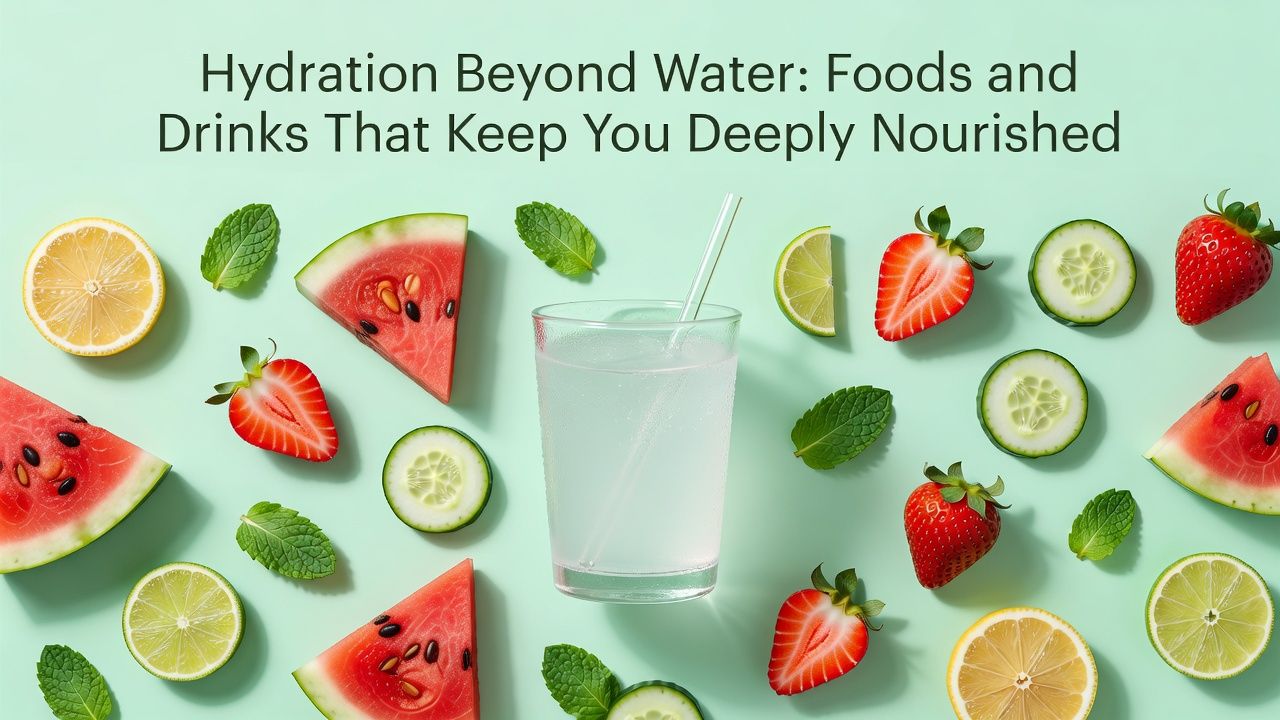
Here’s the fact that reframes the whole subject: a significant portion of your daily hydration comes from food, and some foods are water in solid form. Many fruits and vegetables are extraordinarily water-dense — well above 90% water — which means a summer salad or a bowl of fruit hydrates you meaningfully while also delivering fiber, vitamins, minerals, and the electrolytes that help your body actually use that water. This is why people eating plenty of produce often stay well hydrated without thinking about it, and why hydration and a healthy diet are the same project viewed from different angles. The most water-rich options:
| Food | Roughly water by weight | Bonus |
|---|---|---|
| Cucumber, lettuce, celery | ~95%+ | Crunch, fiber, near-zero effort |
| Watermelon, strawberries | ~91–92% | Vitamins, antioxidants, natural sweetness |
| Tomatoes, bell peppers | ~93% | Vitamin C, carotenoids |
| Oranges, melon, peaches | ~88–90% | Potassium, vitamin C, fiber |
| Yogurt, cottage cheese | ~80%+ | Protein, calcium, probiotics |
| Soups & broths | Very high | Warming, electrolytes, satisfying |
Broth-based soups deserve special mention as a hydration MVP, especially in cold weather when people drink less water — a bowl of soup delivers fluid, electrolytes, and warmth at once, which is part of why soup feels so restorative when you’re unwell. The practical upshot is liberating: you don’t have to white-knuckle your way through glasses of water if your plate is doing much of the work. Building meals around water-rich produce, keeping cut fruit and vegetables handy, and enjoying soups and yogurt all contribute to hydration invisibly — and they bring nutrition that plain water can’t. Hydration, properly understood, is less a drinking task than an eating-and-drinking pattern.
Drinks decoded: what counts, what doesn’t
The other great myth is that only plain water hydrates. In fact nearly all fluids contribute, and the caffeine-is-dehydrating belief is largely overturned. Here’s the honest ledger of common drinks:
| Drink | Hydration verdict | Notes |
|---|---|---|
| Water | The default, calorie-free best | Tap is fine almost everywhere; sparkling counts too |
| Tea & coffee | Net hydrating for most people | Moderate caffeine’s mild diuretic effect doesn’t cancel the fluid; herbal teas are excellent |
| Milk & plant milks | Hydrating & nourishing | Milk performs well thanks to electrolytes & protein |
| Coconut water | Hydrating, with potassium | Fine; not the miracle marketing claims — and watch the sugar |
| Fruit juice | Hydrating but sugar-heavy | Whole fruit is better; keep juice small |
| Sports/electrolyte drinks | Useful in specific cases | For heavy sweating/illness; usually unnecessary sugar for daily life |
| Alcohol | Genuinely dehydrating | The real diuretic — alternate with water |
The caffeine point is worth underlining because the myth is so entrenched: at the moderate intakes most people consume, the mild diuretic effect of tea and coffee is more than offset by their water content, so your morning coffee is a net positive for hydration, not a debt to repay — a conclusion supported by hydration research and echoed by the Academy of Nutrition and Dietetics. Herbal teas are a particularly nice tool, offering variety and warmth with no caffeine at all. The two genuine exceptions on the list are alcohol, which really does pull water from the body (hence the value of alternating drinks with water), and sugary drinks, which hydrate but bring a sugar load that outweighs their usefulness for everyday hydration. For daily life, water and unsweetened drinks are the smart base, with everything else in reasonable proportion.
Electrolytes: the missing half of hydration
Hydration isn’t only about water volume; it’s about water and the electrolytes — sodium, potassium, magnesium, and others — that let your cells actually hold and use it. This is why drinking large amounts of plain water while sweating heavily can sometimes leave you feeling worse: you’ve diluted your electrolytes without replacing them. For everyday life, a normal diet supplies plenty of electrolytes (potassium from fruits and vegetables, sodium from ordinary food, magnesium from nuts, seeds, and greens), and no special products are needed — the trendy electrolyte powders and drinks are unnecessary for most people most of the time, and some are simply sugar and salt at a premium. The body’s balance is usually handled automatically by the food you already eat.
Electrolyte replacement genuinely matters in specific situations: prolonged intense exercise or heavy sweating, hot climates, and illness involving significant fluid loss through vomiting or diarrhea — the last being especially important for children and older adults, where medical oral rehydration solutions (which have carefully balanced electrolytes) can be important, and where a doctor’s guidance matters. For those cases, an electrolyte drink or even a simple homemade solution serves a real purpose. But for the ordinary desk worker sipping through the day, an electrolyte supplement is a solution to a problem they don’t have. The guiding principle: match your hydration strategy to your actual situation. A varied diet plus drinking to thirst covers the vast majority of daily life; deliberate electrolyte replacement is a targeted tool for the genuinely demanding conditions, not a daily wellness ritual.
A relaxed, effective hydration approach
Pull it all together and hydration stops being a chore and becomes a byproduct of eating and living reasonably. The practical approach: make water your default drink and keep it easy to reach (a bottle on the desk genuinely helps, since convenience drives behavior); enjoy tea, coffee, and other fluids freely as part of your intake; build your diet around water-rich fruits and vegetables so a good chunk of hydration arrives on the plate; lean on soups in cold weather; and drink a bit more, deliberately, around exercise, heat, and illness. Use two simple gauges rather than a rigid count — thirst and urine color (aim for pale yellow) — and otherwise trust the remarkable self-regulating system you were born with. That’s genuinely the whole method for a healthy adult.
A few closing cautions keep it responsible. Certain people should be more attentive or follow specific medical advice: older adults with a blunted thirst response, young children, pregnant and breastfeeding women, and anyone with kidney, heart, or other conditions that affect fluid balance — some of whom are actually advised to limit fluids, which is exactly why “more water is always better” is bad blanket advice. Persistent excessive thirst, by the way, can occasionally signal an underlying condition worth checking with a doctor rather than just drinking through. But for the healthy majority, the takeaway is refreshingly freeing: put down the counting app and the eight-glass guilt, eat plenty of colorful produce, drink a variety of fluids when you’re thirsty, glance at the color now and then, and let your body do the sophisticated job it has always done. Deep hydration was never about forcing water — it’s about nourishing yourself well, from the plate and the glass together.