Health & Nutrition
“Anti-inflammatory diet” is one of the most hyped phrases in wellness — and also one of the few with real science underneath. Here’s what inflammation actually is, and how food genuinely influences it.
Few wellness terms get thrown around as loosely as “inflammation.” It’s blamed for everything, cured by everything, and understood by almost no one who repeats it. So let’s start with what’s real, because the underlying science genuinely matters. Inflammation is not a villain — it’s the immune system’s essential response to injury and infection, the redness around a cut, the swelling that fights a virus, the acute healing process you couldn’t survive without. The problem is a different animal: chronic low-grade inflammation, a persistent, smoldering background activation of the immune system that never fully switches off. Unlike the acute kind, it produces no obvious symptoms for years, but researchers have increasingly linked it to the major chronic diseases of modern life — heart disease, type 2 diabetes, certain cancers, and more — making it one of the more important concepts in preventive health that most people have never had explained plainly.
Diet is one meaningful lever on this background inflammation — not the only one (sleep, stress, exercise, smoking, and body composition all matter), but a real one with a substantial research base. The encouraging part is that the “anti-inflammatory diet” isn’t an exotic protocol requiring special powders; it converges almost exactly on the eating patterns that decades of nutrition science already recommend for the heart, the metabolism, and longevity, described from a different angle. Bodies like the Harvard Nutrition Source and the National Institutes of Health treat this as mainstream nutrition, not fringe. This guide separates the well-supported from the overhyped — and, importantly, frames it as adding nourishing foods rather than a restrictive regimen, because anti-inflammatory eating is about patterns over years, not perfection or punishment. If you have a diagnosed condition or a complicated relationship with food, treat this as background and personalize it with a doctor or registered dietitian.
What chronic inflammation actually is
To eat in a way that influences inflammation, it helps to picture the mechanism. When the immune system detects a threat, it releases signaling molecules (cytokines) and mobilizes cells to deal with it; once the threat clears, healthy inflammation resolves and the system stands down. Chronic low-grade inflammation is what happens when that stand-down doesn’t fully occur — when ongoing triggers keep the system mildly activated indefinitely. The triggers are cumulative and lifestyle-linked: excess visceral fat is itself metabolically active and inflammatory, chronic stress keeps stress hormones elevated, poor sleep dysregulates immune signaling, smoking and excess alcohol contribute, and a diet high in refined sugar, refined carbohydrates, and certain processed fats appears to nudge the system toward the inflammatory end. Doctors can glimpse this state through markers like C-reactive protein (CRP) on blood tests, though most chronic inflammation simply runs silently in the background.
Food influences this in a few plausible ways. Some foods supply raw materials the body converts into more or less inflammatory signaling compounds — the balance of certain fats, for instance, feeds into these pathways. Others deliver antioxidants and polyphenols that help manage the oxidative stress that accompanies inflammation. Fiber feeds gut bacteria that produce anti-inflammatory compounds, tying the whole topic to gut health. And blood-sugar stability matters because repeated sharp glucose spikes are associated with inflammatory responses. None of these effects is dramatic from a single meal; the point is the pattern, sustained over months and years, gradually shifting the body’s baseline. That’s why chasing individual “anti-inflammatory superfoods” misses the point — a sprinkle of turmeric on an otherwise inflammatory diet is a rounding error. The diet as a whole is the intervention.
The foods that help (and why)
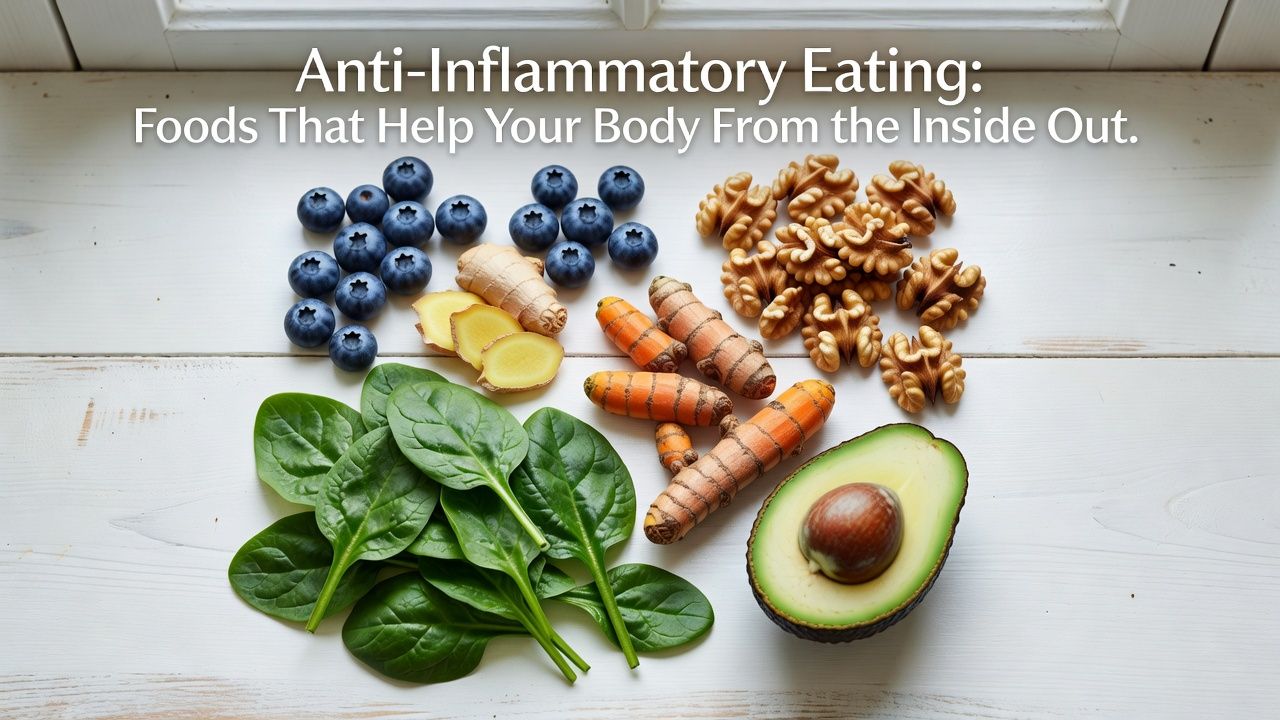
The building blocks of an anti-inflammatory pattern are ordinary, affordable, and delicious — which is exactly why the pattern is sustainable. Think of these as the foods to crowd your plate with, not a checklist to obsess over:
| Food group | Examples | The inflammation angle |
|---|---|---|
| Oily fish | Salmon, sardines, mackerel, herring, anchovies | Omega-3 fats feed anti-inflammatory signaling pathways |
| Colorful vegetables | Leafy greens, broccoli, peppers, tomatoes, beets | Polyphenols and antioxidants manage oxidative stress; fiber feeds the gut |
| Berries & whole fruit | Blueberries, cherries, strawberries, oranges | Anthocyanins and vitamin C; fiber blunts sugar spikes |
| Extra-virgin olive oil | The Mediterranean staple fat | Contains oleocanthal, studied for gentle anti-inflammatory effects |
| Nuts & seeds | Walnuts, almonds, flax, chia | Healthy fats, fiber, vitamin E |
| Legumes & whole grains | Lentils, beans, chickpeas, oats, barley | Fiber and steady energy without sharp glucose spikes |
| Herbs & spices | Turmeric, ginger, garlic, cinnamon | Bioactive compounds with supportive (if modest) evidence |
| Green tea & coffee | In moderation | Polyphenols associated with lower inflammatory markers |
Two honest caveats keep this from tipping into hype. Turmeric deserves its own footnote: curcumin has real anti-inflammatory activity in studies, but it’s poorly absorbed from food, and the dramatic results often come from concentrated supplements at doses far above what a curry provides — culinary turmeric is a pleasant contributor, not a cure, and supplements warrant a chat with your doctor, especially alongside medications. And the whole list works through synergy: it’s the combination of these foods, displacing more inflammatory options, that shifts the baseline — not any single hero ingredient you could buy in a bottle and otherwise ignore.
The foods worth easing back on
The other half of the pattern is what it gently displaces — and the emphasis is on displaces, not “forbids,” because a rigid list of banned foods is both unnecessary and, for many people, psychologically counterproductive. The dietary factors most associated with promoting inflammation cluster into a recognizable group:
| Ease back on | Why | Reasonable approach |
|---|---|---|
| Sugary drinks & added sugar | Sharp glucose spikes linked to inflammatory responses | The biggest single win for most people; treat as occasional |
| Refined carbohydrates | White bread, pastries spike blood sugar; low fiber | Swap toward whole-grain versions most of the time |
| Ultra-processed foods | Associated with worse inflammatory and health markers | Cook more from whole ingredients when you can |
| Processed & heavily charred meats | Linked to inflammation and other health risks | Make them the exception; lean toward fish, poultry, legumes |
| Excess alcohol | Heavy intake is pro-inflammatory and taxes the liver | Moderation; the safest amount is less than many assume |
Notice the framing throughout: reduce frequency, swap toward better defaults, cook more from scratch — not eliminate, fear, or moralize. The single most impactful change for most people is cutting back on sugary drinks and heavily processed foods, and even that is best done gradually and flexibly. An all-or-nothing “clean eating” mindset tends to backfire, and there’s a real trap worth naming: the anti-inflammatory label has been used to justify increasingly restrictive eating that shades into disordered territory. No food is “toxic,” occasional treats don’t undo a good pattern, and a diet you can’t sustain — or that generates constant anxiety — isn’t actually anti-inflammatory, since chronic stress promotes the very inflammation you’re trying to reduce. The goal is a genuinely enjoyable, mostly-whole-food way of eating you’ll keep for decades.
The pattern, not the parts: Mediterranean as the model
The most-studied real-world example of anti-inflammatory eating is the Mediterranean dietary pattern — abundant vegetables, fruit, legumes, whole grains, olive oil, nuts, and fish, with modest dairy and poultry and little red or processed meat. It isn’t studied because it’s exotic; it’s studied because large trials and long-term observational research consistently associate it with lower inflammatory markers and reduced rates of heart disease and other chronic conditions, making it one of the best-evidenced eating patterns in all of nutrition science. It also happens to be flexible, culturally rich, and built around genuinely appealing food, which is why people actually stick with it — the quality that separates a real dietary pattern from a diet that lasts three weeks. Similar plant-forward, whole-food patterns from other cuisines (traditional Japanese, many South Asian vegetarian traditions, and others) share the same anti-inflammatory bones.
Crucially, this reframes the whole project away from products and toward habits. You don’t need to buy anything with “anti-inflammatory” on the label; you need a plate that leans heavily on plants and fish, uses olive oil as the main fat, treats whole grains and legumes as staples, and makes sugar and ultra-processed food occasional rather than central. Practical on-ramps are simple: build meals around vegetables rather than adding them as an afterthought, keep tinned fish and frozen berries on hand for convenience, cook one extra portion to have leftovers instead of processed lunches, and make small swaps (whole grain for refined, water or tea for soda) that compound. The Academy of Nutrition and Dietetics offers reliable, non-faddish guidance and can help you find a registered dietitian if you want the pattern tailored to your health, budget, and tastes.
Keeping perspective
Two final perspectives keep anti-inflammatory eating both useful and sane. First, diet is one input among several, and food evangelists often oversell it. The other levers matter enormously and sometimes more: regular movement is powerfully anti-inflammatory, adequate sleep regulates immune signaling, chronic stress drives inflammation regardless of what you eat, not smoking is foundational, and maintaining a healthy body composition addresses one of inflammation’s biggest drivers. The best results come from the whole lifestyle, not from perfecting the plate while ignoring the rest — and there’s freedom in that, because it means no single meal or slip carries the weight the wellness internet implies. Overviews from the Harvard Health family of resources consistently place diet inside this larger picture rather than above it.
Second, and most importantly: this is general information, not medical advice, and it is emphatically not a license for restriction or self-diagnosis. If you have an inflammatory or autoimmune condition, elevated inflammatory markers, or any chronic illness, dietary changes should be made with your healthcare team, since specifics vary by individual and some conditions have particular requirements. And if the idea of an “anti-inflammatory diet” is tugging you toward cutting out more and more foods, tracking obsessively, or feeling guilt around eating, please step back — that pattern harms health more than any food does, and support is available; a doctor or a professional experienced with eating concerns is the right first call. For everyone else, the takeaway is refreshingly undramatic and genuinely good news: the way of eating that helps calm chronic inflammation is the same colorful, plant-rich, mostly-whole-food, thoroughly enjoyable pattern that supports nearly every part of long-term health — no special products required, built to be lived with, one good plate at a time.